The number you run the week on
The Monday meeting starts with an explanation. The store says one thing. The ads account says another. The sheet, which someone built on Sunday, says a third. The first twenty minutes go on which number the room will use.
Ecommerce contribution margin names the decision line. MER vs ROAS: which number do you spend against? is why the tiles disagree on purpose. Ecommerce automation is the class of system when a person is still doing the join. This page stays on the meeting. One number to run the week on. What has to be true for it to arrive before anyone assembles it.
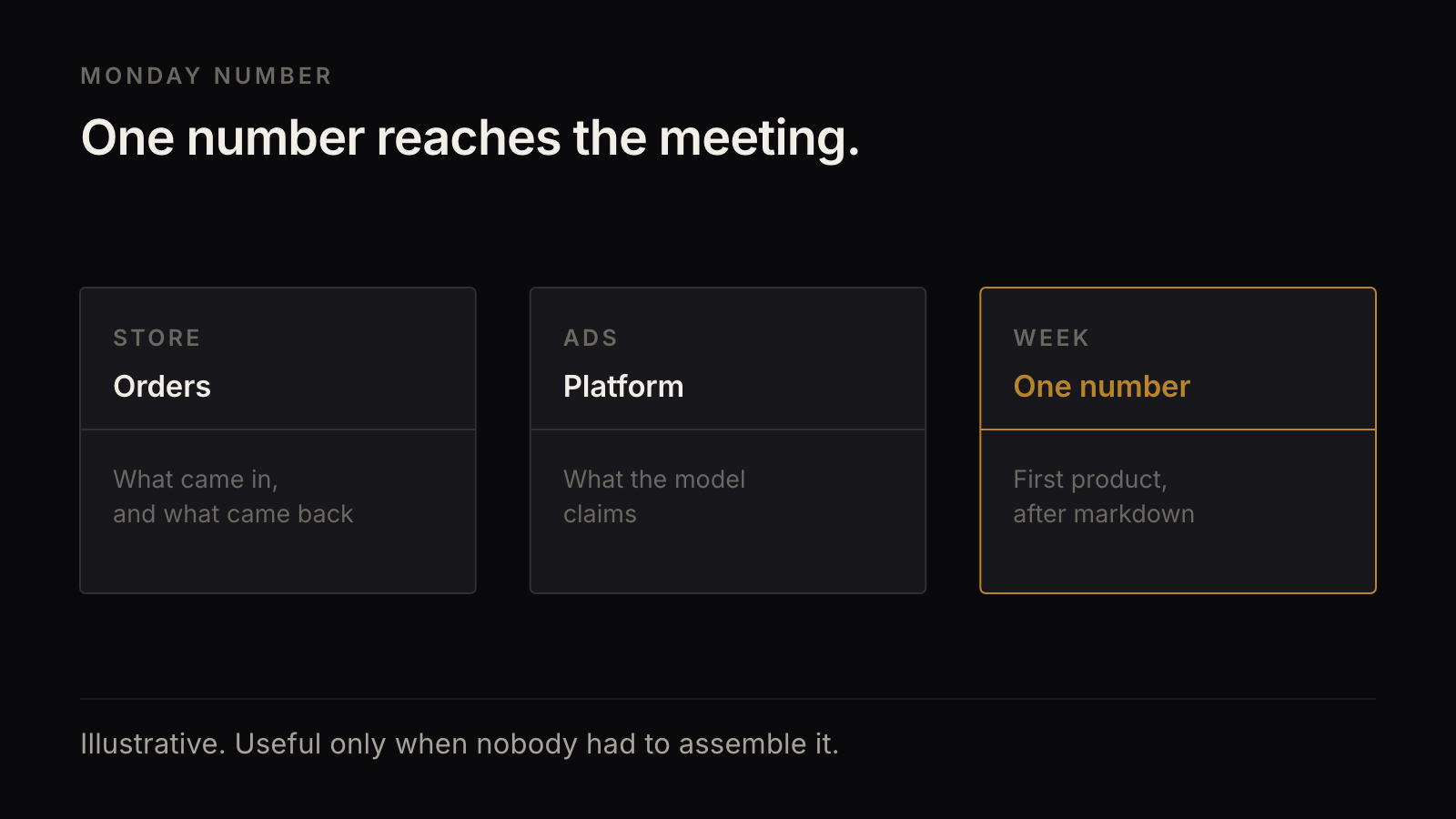
One number, on the first product
Run the week on contribution for the first product, after returns and markdown. The definition of that line is already written. Do not rebuild it in the meeting. Use it at the grain of the product that took the spend.
For a fashion drop, that product is the shirt or the dress you paid to show, after size returns and the markdown you already know is coming. For a beauty brand, it is the serum or the shade that should come back, after the gift and the first-order discount.
Store revenue can open the meeting. Platform ROAS can sit in the ads review. The week is decided on what that first product left.
Why the three sources disagree
The store counts orders. The ads account counts what its model claims. The sheet counts whatever was pasted into it. They are allowed to disagree. A meeting that tries to make them agree will spend the hour on reconciliation.
Reconciliation is a useful check once a month. It is a poor way to decide Tuesday’s spend, the next size buy, or whether the code stays on. Pick the number that can carry those decisions. Let the other two explain themselves afterwards, on a cadence that is not the weekly meeting.
What has to be true before Monday
Four conditions. If one of them fails, someone will build the number by hand, and the meeting will start with the explanation again.
- The first product is named. A hero, a serum, a shade. The range is not a product.
- Returns and markdown are in the line, on a rule the team has written down.
- The store, the ads spend, and the order export land in one place before the meeting.
- The same definition is used every week. A new cut every Monday is a new argument.
Ecommerce automation is where the join belongs once you know which leak you are removing. This page does not pick a tool. It says what the tool, or the build, has to deliver: the number, before the meeting, without a person in the middle.
If someone still builds it on Monday
If a person exports, pastes, and explains the number before anyone can decide, the number has not been built. You have a ritual. The ritual can be accurate. It is still late, and it still depends on whoever did the Sunday export.
A useful system delivers the number. The person in the meeting decides. They choose the spend, the buy, or the code. They do not assemble the line.
The sources already exist. The missing piece is the join that makes one of them the week. What does an ecommerce consultant do? is the first month when that join is the commercial objective.
TwoKai starts with the outcome. A week you can run on one number. Then we engineer the route that gets it to Monday.
What's missing
This article can name the number to run the week on, and the four conditions that let it arrive without assembly. It cannot tell you what your first product left last week, or which of your three sources is off. That read is your orders.
Related: Ecommerce contribution margin · MER vs ROAS: which number do you spend against? · Ecommerce automation · What does an ecommerce consultant do? · Explore an opportunity with TwoKai
If you want that join led as one commercial piece of work, Explore an opportunity with TwoKai.